In the stratified world of aggregate processing equipment, a clear hierarchy of cost exists. At the apex sit track-mounted crushers, commanding price points that can give even seasoned project managers pause. To dismiss this as mere premium branding is a fundamental misunderstanding. The elevated investment is a direct reflection of concentrated engineering, uncompromising operational logic, and a design philosophy that prioritizes capability over mere cost-saving. These mobile crushers are not just crushers on tracks; they are autonomous, high-tempo production nodes that embody a specific and valuable economic calculus.
The Premium of Autonomy: Unpacking Self-Contained Mobility
The primary differentiator is immediately visible: the tracked undercarriage. However, the cost is not simply for the steel tracks themselves. It is for the profound and complex autonomy this system enables. A track-mounted crusher is a masterclass in integrated systems engineering.
The Engineering Behind Integrated Locomotion
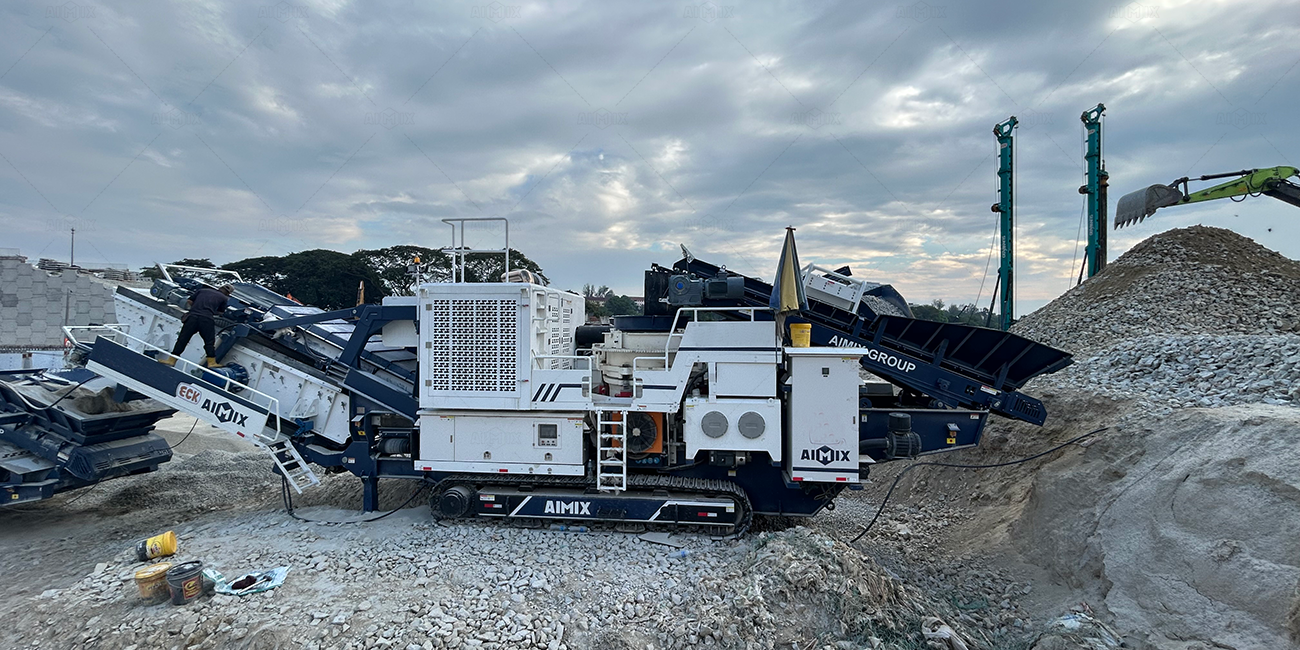
Unlike a trailer-mounted unit that relies on a separate prime mover, a track-mounted plant incorporates its own sophisticated locomotion system. This isn't a simple bolt-on component. It involves high-torque, variable-speed hydraulic track drives, robust final drives, and a heavily reinforced chassis designed to absorb massive dynamic loads while moving over unforgiving terrain. The engineering ensures equal weight distribution to achieve a low ground pressure, allowing operation on sites where trucks cannot tread. This integrated system requires specialized components—think slew bearings, durable track chains, and advanced hydraulic pumps—that are far costlier than the standard axles and brakes of a towable unit. You are paying for a factory-integrated, purpose-built drivetrain, not just mobility.
The Cost of On-Board Intelligence and Power
This autonomy extends to power and control. A top-tier track-mounted crusher is a self-contained fortress of performance. It houses a large, Tier 4 Final or equivalent compliant diesel engine that simultaneously powers the crushing chamber, the hydraulics for the tracks, the feed conveyor, and the onboard screening unit if it's a closed-circuit plant. This requires an intricate network of hydraulic circuits, advanced electronic control modules, and complex cooling systems. The control system is another significant cost driver. Modern track mounted crusher feature intuitive touchscreen interfaces that allow an operator to manage everything from engine rpm and crusher speed to track steering and conveyor deployment from a single station. This convergence of mechanical, hydraulic, and digital intelligence into a single, mobile platform represents a pinnacle of industrial design—and its development, integration, and manufacturing carry a substantial price tag.
Maximized Operational Tempo: The Economics of Continuous Production
The high capital outlay is justified through a radical optimization of operational tempo. These machines are engineered to transform the traditional stop-start cycle of crushing into a near-continuous flow, maximizing material processed per hour and per day.
Eliminating Non-Value-Added Time: Setup, Teardown, and Repositioning
Consider the operational cadence of a conventional setup. A wheeled plant arrives, requires a loader or crane for setup, is leveled, and then begins production. To move 100 meters requires reversing this entire process. This non-value-added time is a silent budget killer. A track-mounted crusher obliterates this inefficiency. With remote-controlled movement, it can be driven off a low-boy trailer and into production in minutes. More critically, it can reposition itself around a site under its own power in a matter of minutes—between faces, around stockpiles, or to follow a progressing trench. This continuous operational readiness means more hours per day are spent actually crushing, directly translating to faster project completion and higher revenue generation. You are purchasing not just a machine, but time itself.

Direct Feed Dynamics and the High-Cost, High-Output Equation
This tempo is amplified by sophisticated feeding and material flow designs. Many tracked crushers for gravel are designed for direct feed from an excavator or wheel loader, minimizing re-handling. Features like feeder systems with integrated pre-screens (often called "scalpers") actively remove fines and bypass material before it even reaches the crusher, dramatically increasing the throughput of the main chamber and reducing wear. This focus on maximizing legitimate, spec-yield output per fuel burn is a core part of the value proposition. The machine is engineered to be a high-utilization asset, and its cost is amortized over a vastly greater lifetime tonnage than a less mobile, slower-to-deploy alternative. The expense is upfront; the financial return is captured in relentless, efficient production.
The Specialization Dividend: Paying for Targeted Performance
Finally, the market for track-mounted crushers is one of intense specialization. These are not generalist machines, and their development costs are spread across a lower production volume than more common equipment types.
Market Fragmentation and the Low-Volume, High-R&D Reality
The track-mounted segment is highly fragmented. There are jaw crushers, impact crushers, cone crushers, and screener-crushers, each in multiple size classes, tailored for different materials—from recycled concrete to hard abrasive granite. Developing a new model requires immense R&D investment in crushing chamber geometry, kinematics, and wear part metallurgy, all while ensuring it integrates perfectly with the complex mobile chassis. This specialized, low-volume manufacturing model inherently carries higher unit costs. Economies of scale are less pronounced. You are funding a deep, focused expertise in making a specific type of machine exceptionally well for a specific set of high-demand applications, primarily in contract crushing, recycling, and medium-scale aggregate production.
Durability as a Non-Negotiable: Materials and Build Philosophy
These machines are expected to endure a punishing lifecycle of constant vibration, shock loading, and abrasive dust. Cost-cutting on materials is not an option. Critical components are fabricated from high-strength, abrasion-resistant steels. Bearings are oversized for longevity. Hydraulic hoses are of the highest grade with protective sleeving. Every weld is critical. The build philosophy is one of over-engineering for reliability, because downtime on a machine that can cost hundreds of dollars per hour to operate is catastrophic. This commitment to durability, from the grade of steel in the hopper to the seals in the hydraulic cylinders, is a significant driver of the initial price. It is, fundamentally, an investment in lower total cost of ownership, reduced maintenance interrupts, and sustained high performance over the long term. The expense is in the build, so the machine can endure the grind.


